Rum was cleared of its indigenous population in the 1820s, who were packed off to Canada. None now remain. Private owners have kept the island as their playground, taking them shooting and fishing. At the end of the 19th century, the Bullough family, textile tycoons from Accrington in Lancashire (England) decided to build a castle there. Kinloch Castle remains as it was at the start of the 20th century, with mind-boggling opulence in an area of Scotland more noted for its grinding poverty at the time. A Steinway grand-piano (which I played twice), 8 ft high Japanese vases, a billiard room. At one time, conservatories lined the exterior of the castle, fully heated. Humming birds flitted around these, until the central heating broke. Their remains are now pinned up in a glass case. Kinloch Castle was occupied by its owner for 6 weeks out of every 52 in the year. Its demise began with the First World War, when the staff were called up. By 1957, the last owner, Lady Monica, had been taken across the island to be laid to rest in the family mausoleum at Harris (different from the Harris south of Lewis). The Nature Conservancy Council were gifted the island for a nominal amount, and they established a study area for red deer.
Rum is a stunning place, but also very sad. Author John Love wrote a book about its history, called A Landscape without Figures. Permanent population 0. Current population is all workers for SNH (successor to NCC).
This set on Flickr.com shows 128 images of the island, including many from within Kinloch Castle. I told its history in a post on Northern Trip from October 2007, when I last visited. A photo compilation can be viewed here. The orchestrion plays here.
Wednesday, 14 January 2009


Thursday, 1 January 2009
In Remembrance - Iolaire 90 years ago
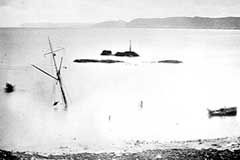 At 1.55 am on 1 January 1919, HMY Iolaire sank at the Beasts of Holm. More than 200 sailors, the vast majority from Lewis, drowned. About 75 were rescued. The remains of 60 were never recovered. Rather than their loved ones, many island homes received a visit from a church elder, bringing the worst possible news. Followed, not many days later, by the burials of those who had been found on the shores of Stornoway Harbour, the Braighe and Lochs. The circumstances of the sinking have never been satisfactorily cleared up.
A service of remembrance will be held on the shore overlooking the site where Iolaire went down, 90 years ago today. Although I’m not there myself, my thoughts will most definitely be on those lost in the Iolaire, their families left bereaved. I hope that by the 100th anniversary in 2019, the Royal Navy records on this case will be published to finally bring closure on a sad saga.
Those who wish to know more can visit my own webpage or that of the Stornoway Historical Society. A list of casualties and survivors has been collated on this site.

Saturday, 6 December 2008
Not at the helm
6 November 2008
A fishing boat went down off Bayble, some 5 miles east of Stornoway. Fortunately, all crew were saved uninjured. An inquiry has revealed that the skipper had left the wheelhouse of the Faithful Friend II a few minutes beforehand to make a cup of coffee, leaving the boat to proceed on auto-pilot. She struck a rock, which was well charted, and sank fairly quickly. A quick Mayday call, nearby vessels and a rapid response from the Coastguard prevented loss of life. The owner of the Faithful Friend II has been forcefully reminded of the necessity of watch-keeping on his boats at all times.
1 June 2006
Fishing boat Brothers leaves the harbour of Gairloch in Wester Ross (southeast of Stornoway) and proceeds to head west across the Minch. It never returned to port, and sound nor sight was seen of it again. A massive search was launched in the Minch, but the wreck of the Brothers was finally located beneath 40 feet / 12 metres of water off an island just north of Skye. The bodies of the two men on board were not in the wreck. One of them turned up in Gruinard Bay, 35 miles to the northeast 3 weeks later. The other was never found. It is thought they left port after a few drinks the evening before and dropped off to sleep. When the boat ran aground, it must have sunk quickly, leaving them no chance to save themselves.
19 December 2004
Fishing boat Audacious leaves Stornoway harbour in the early hours of the morning. The crew leave the boat on auto-pilot, which appears to malfunction. The boat runs aground just south of the lighthouse at Arnish. The skipper drowned, but two other crew were rescued.
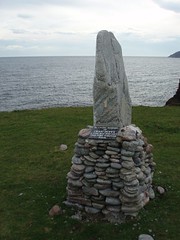
A memorial to the skipper was later erected near the lighthouse.
A fishing boat went down off Bayble, some 5 miles east of Stornoway. Fortunately, all crew were saved uninjured. An inquiry has revealed that the skipper had left the wheelhouse of the Faithful Friend II a few minutes beforehand to make a cup of coffee, leaving the boat to proceed on auto-pilot. She struck a rock, which was well charted, and sank fairly quickly. A quick Mayday call, nearby vessels and a rapid response from the Coastguard prevented loss of life. The owner of the Faithful Friend II has been forcefully reminded of the necessity of watch-keeping on his boats at all times.
1 June 2006
Fishing boat Brothers leaves the harbour of Gairloch in Wester Ross (southeast of Stornoway) and proceeds to head west across the Minch. It never returned to port, and sound nor sight was seen of it again. A massive search was launched in the Minch, but the wreck of the Brothers was finally located beneath 40 feet / 12 metres of water off an island just north of Skye. The bodies of the two men on board were not in the wreck. One of them turned up in Gruinard Bay, 35 miles to the northeast 3 weeks later. The other was never found. It is thought they left port after a few drinks the evening before and dropped off to sleep. When the boat ran aground, it must have sunk quickly, leaving them no chance to save themselves.
19 December 2004
Fishing boat Audacious leaves Stornoway harbour in the early hours of the morning. The crew leave the boat on auto-pilot, which appears to malfunction. The boat runs aground just south of the lighthouse at Arnish. The skipper drowned, but two other crew were rescued.
A memorial to the skipper was later erected near the lighthouse.
Tuesday, 18 November 2008
Tragedy at Arnol
In June 2007, a man of 60 went out canoeing with his youngest son. He was a father of 11, living in the village of Arnol, 15 miles north of Stornoway. That afternoon, the two were seen by a chance walker off the coast by the next village, Bragar. Thinking nothing of it, the walker went on her way, and after a little while came to the beach by the cemetery at Bragar.
Where one of the canoes was found washed up. She immediately raised the alarm, and the Coastguard found the man in the water. He was quickly transferred to hospital, but did not survive. His son was not found for another 3 weeks, in spite of intense search efforts which were carried on quite late in the evening, on account of the long evenings in June.
Whenever I pass through Arnol, I pass the house where the family used to live - I seem to remember they moved away - and feel the sadness. As in all communities by the sea, this is only too common an occurrence. Even in the few years I've been here, several tragedies like this have occurred. Those left behind remain in my thoughts.
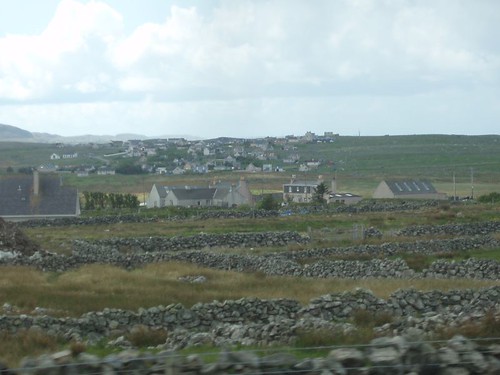
View across the walls of Arnol to the next village, Bragar.
Where one of the canoes was found washed up. She immediately raised the alarm, and the Coastguard found the man in the water. He was quickly transferred to hospital, but did not survive. His son was not found for another 3 weeks, in spite of intense search efforts which were carried on quite late in the evening, on account of the long evenings in June.
Whenever I pass through Arnol, I pass the house where the family used to live - I seem to remember they moved away - and feel the sadness. As in all communities by the sea, this is only too common an occurrence. Even in the few years I've been here, several tragedies like this have occurred. Those left behind remain in my thoughts.
View across the walls of Arnol to the next village, Bragar.
Sunday, 16 November 2008
Wargraves
It is 4 years ago that I arrived in Lewis, and among the handful of activities that I have engaged in over that period of time is photography of wargraves and war memorials. I have so far located over 330 individual graves of war dead or gravestones linked to these casualties in the two dozen cemeteries in Lewis and Harris. The task is not complete, as I initially focused on the victims of the Iolaire Disaster, later of World War I and this year World War II.
Photographs and additional information can be accessed through this page on the Scottish War Graves Project website.
This is an example of a wargrave in the cemetery at Gravir, South Lochs.

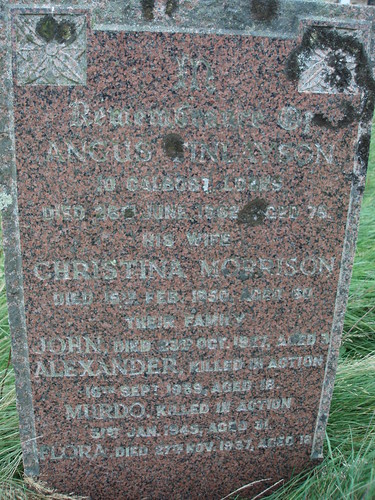
Able Seaman MURDO FINLAYSON
Murdigan Aonghais Alasdair
Last address in Lewis: 10 Calbost
Son of Angus and Christina Finlayson, of Lochs.
Service: Merchant Navy
Date of death: 1 February 1944
Lost on SS Caleb Sprauge, when that ship was sunk at Newhaven by enemy action.
Had served in RNR for 2 years 9 months before war
Interred: Gravir Cemetery
Local memorial: Pairc, Kershader
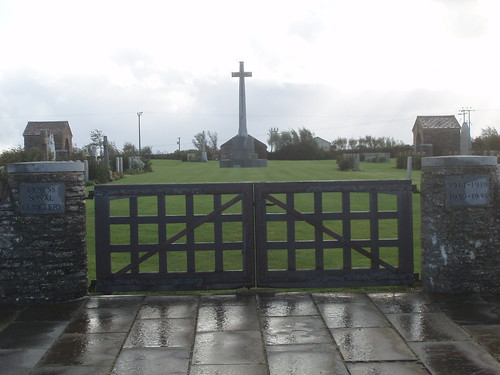
Last month, I visited the island of Hoy in Orkney to take pictures of all the (named) wargraves in the Royal Naval Cemetery at Lyness. I have now completed the task of putting images and information on a different page of the Scottish War Graves Project. . In this cemetery lie buried the dead from all over the United Kingdom, as well as more than a dozen German service personnel.
Photographs and additional information can be accessed through this page on the Scottish War Graves Project website.
This is an example of a wargrave in the cemetery at Gravir, South Lochs.
Able Seaman MURDO FINLAYSON
Murdigan Aonghais Alasdair
Last address in Lewis: 10 Calbost
Son of Angus and Christina Finlayson, of Lochs.
Service: Merchant Navy
Date of death: 1 February 1944
Lost on SS Caleb Sprauge, when that ship was sunk at Newhaven by enemy action.
Had served in RNR for 2 years 9 months before war
Interred: Gravir Cemetery
Local memorial: Pairc, Kershader
Last month, I visited the island of Hoy in Orkney to take pictures of all the (named) wargraves in the Royal Naval Cemetery at Lyness. I have now completed the task of putting images and information on a different page of the Scottish War Graves Project. . In this cemetery lie buried the dead from all over the United Kingdom, as well as more than a dozen German service personnel.
Tuesday, 11 November 2008
Armistice tribute 2008
Armistice Day, and the 90th anniversary of the end of hostilities in the First World War. The war to end all wars, what a fallacy that turned out to be. Watched the ceremony in Whitehall this morning, when the three remaining surviving veterans of the Great War laid their wreaths at the Cenotaph. The eldest, Henry Allingham, aged 112, laid the wreath with his own hands. Very moving.
My thoughts today are with all who fell in that conflict. And with those who tragically drowned outside Stornoway Harbour on 1 January 1919, on their way home. Their transport, a troopship called the Iolaire [Eagle], ran aground on a reef and sank after an hour and a half. 75 survived, but 205 went to the bottom with her. They had survived up to 4 years of war - only to drown within sight of their home town. Inquiries in 1919 and 1972 did not properly account for the events of that dreadful night.
The village of Shawbost, 18 miles from Stornoway, buried 9 of its sons a few days later. North Tolsta, 13 miles north of the town, had lost the largest number of their young men. Of those drowned, 64 were never found. The remaining 140 were found scattered on the shores around Stornoway; one turned up in Loch Grimshader 5 months later.
I'll close this post with a tribute to one of the victims:
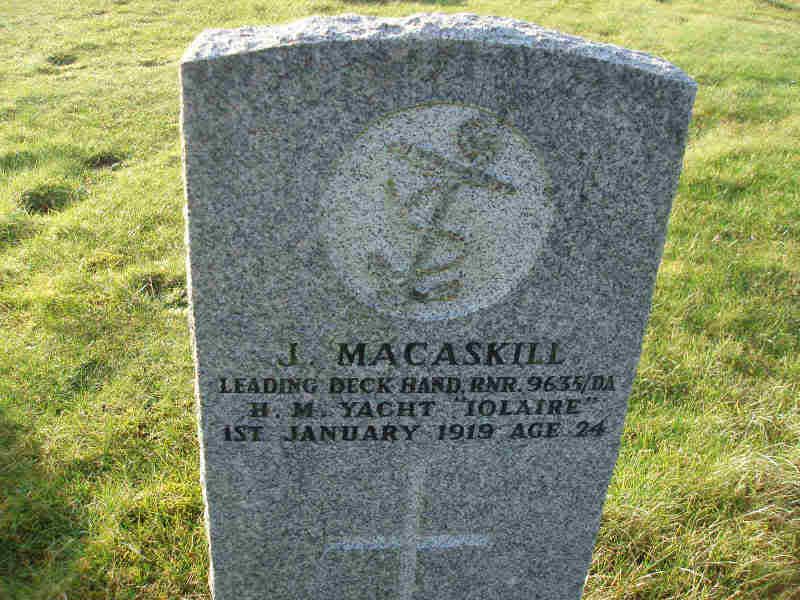
Leading Deckhand John MacAskill
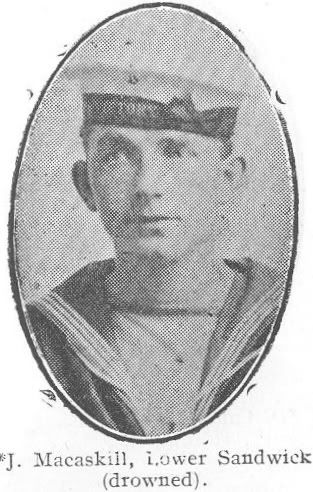
Last address in Lewis: 12 Lower Sandwick
Son of Kenneth and Mary MacAskill, was married
Service: Royal Naval Reserve, HMT Thomas Booth
Service number: 9635/DA
Date of death: 1 January 1919 at the age of 24
John drowned, and lies buried at Sandwick
My thoughts today are with all who fell in that conflict. And with those who tragically drowned outside Stornoway Harbour on 1 January 1919, on their way home. Their transport, a troopship called the Iolaire [Eagle], ran aground on a reef and sank after an hour and a half. 75 survived, but 205 went to the bottom with her. They had survived up to 4 years of war - only to drown within sight of their home town. Inquiries in 1919 and 1972 did not properly account for the events of that dreadful night.
The village of Shawbost, 18 miles from Stornoway, buried 9 of its sons a few days later. North Tolsta, 13 miles north of the town, had lost the largest number of their young men. Of those drowned, 64 were never found. The remaining 140 were found scattered on the shores around Stornoway; one turned up in Loch Grimshader 5 months later.
I'll close this post with a tribute to one of the victims:
Leading Deckhand John MacAskill
Last address in Lewis: 12 Lower Sandwick
Son of Kenneth and Mary MacAskill, was married
Service: Royal Naval Reserve, HMT Thomas Booth
Service number: 9635/DA
Date of death: 1 January 1919 at the age of 24
John drowned, and lies buried at Sandwick
Thursday, 18 September 2008
SS Empire Light
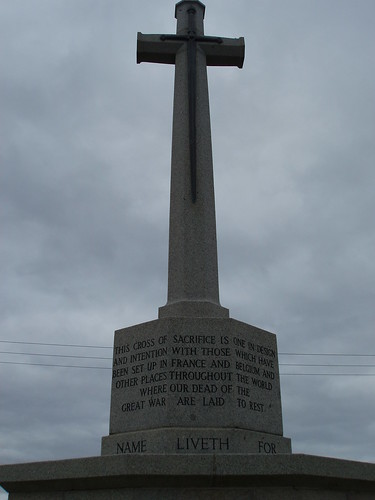
SS Empire Light was sunk in 1941 in the Indian Ocean by the armed German raider Pinguin. Survivors of the encounter were picked up by the German vessel, which itself was then attacked by HMS Cornwall. The Pinguin was sunk, taking the survivors from the Empire Light to the bottom with her.
Twenty-six of the Empire Light's crew perished on 8 May 1941, six of whom came from Lewis. Their names are:
Norman MacIver, 37 Vatisker
Murdo MacDonald, 32 Gress
Donald Graham, Garrabost
Murdo Campbell, 5 Sheshader (also quoted at 42 Inaclete Road, Stornoway)
Norman Malcolm Montgomery, 17 Sheshader
George Campbell, 5 Portnaguran
A visit to the Eye cemetery reveals that this was not just an island tragedy, it was a family tragedy as well. Norman Malcolm Montgomery of 17 Sheshader was related to Murdo Campbell of 5 Sheshader. Norman's mother, Isabella Montgomery nee Macleod, died 6 months after the sinking of the Empire Light. Her husband Norman was lost in the sinking of HMY Iolaire on 1 January 1919, one of the 205 drowned in that disaster.
Subscribe to:
Posts (Atom)